Integrated Report 2025
Our Integrated Report is the main document for communicating to all stakeholders how we operate to generate value sustainably, driven by our portfolio of concessions and a governance model that promotes responsible risk management and maximizes positive socio-environmental impacts.
Our report was also prepared in accordance with the GRI Standards for Sustainability Reporting, issued by the Global Reporting Initiative (GRI). The document was submitted to external verification by an independent third party, in the context of limited assurance.
The content of our Report has the same scope and coverage as the consolidated financial statements – it considers 100% of the concessions and refers to the period between January 1 and December 31, 2025.
2030 ESG Agenda
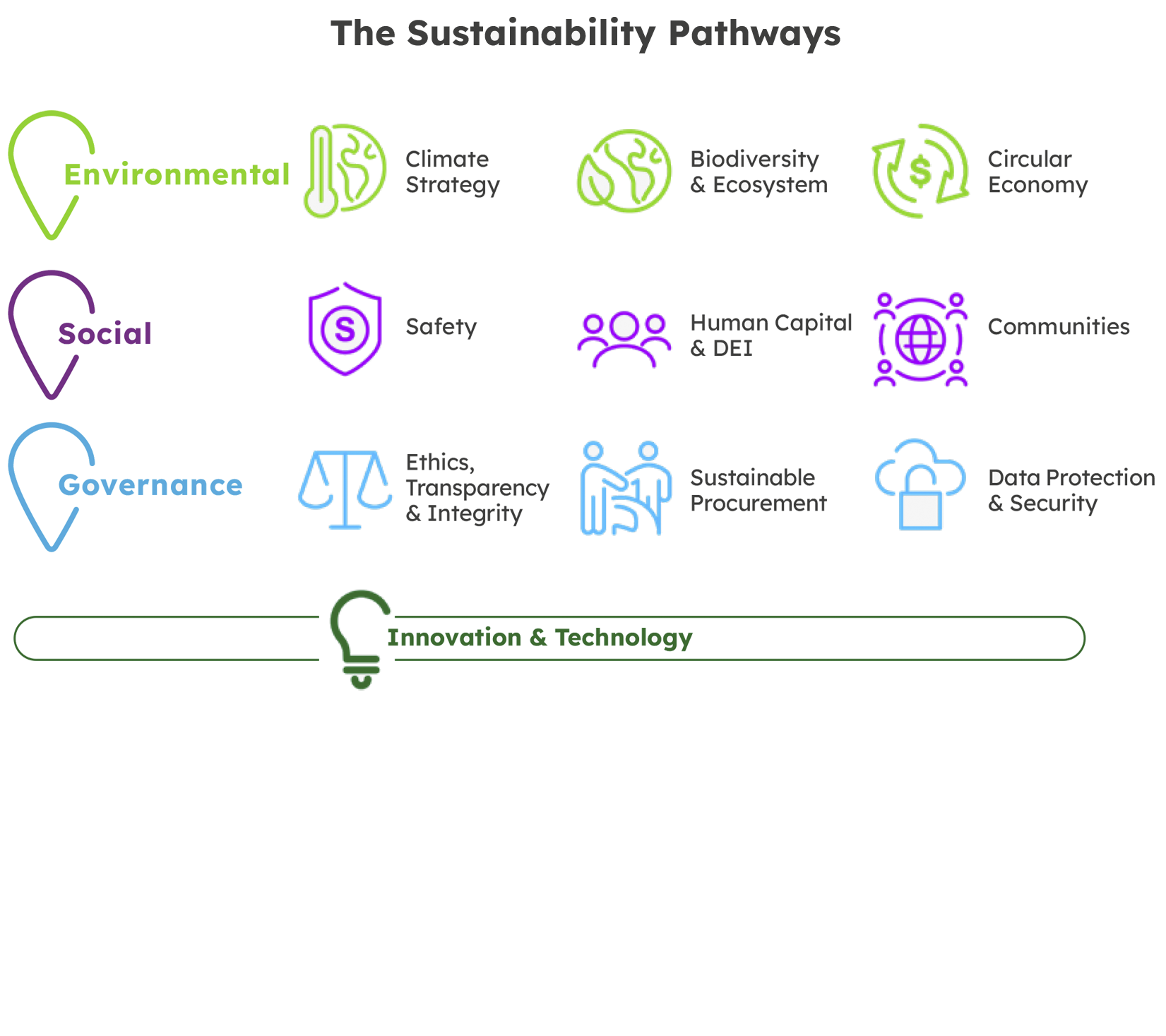
The ESG 2030 Agenda – On the Path to Sustainability is the strategy we have established to integrate business growth with the promotion of sustainable development.
Approved by the Executive Board and the Board of Directors, it began implementation in 2024 with a set of objectives, goals, and action plans that improve the management of the main social, environmental, and governance impacts, risks, and opportunities of our business model.
Each of the ten pathways of the ESG 2030 Agenda has medium- and long-term corporate goals, included in the Profit Sharing Program (PPR) for all employees.
Based on five pillars, our Climate Strategy guides the management of climate risks, impacts, and opportunities in an integrated manner within the Company and vertically across the entire value chain.
Pillars of the Climate Strategy
- Climate Mitigation
- Adaptation & Resilience
- Climate Governance
- Engagement
- Socio-Environmental Development
2025 Highlights
- 25.6% reduction in GHG emissions of scopes 1 and 2 compared to the base year (2020)
- Finalization and approval of the Climate Adaptation Plan
Our Biodiversity Conservation Plan, completed and validated by the Executive Board in 2025, brings a methodological approach to mitigate the impacts of highway operations on Brazilian biomes, formulated based on socio-environmental assessments conducted between 2023 and 2024 in our concessions. The Plan was recognized at the GRI Infra Awards, one of the most important awards in the infrastructure sector.
Axes of the Biodiversity Conservation Plan
- Mitigation
- Environmental Awareness
- Forest restoration
2025 Highlights
- Finalization and approval of the Biodiversity Conservation Plan
- 2,326 hectares planted or preserved since 1999
Ecovias Leste Paulista became the first concessionaire in Brazil to implement the Zero Waste to Landfill system, diversifying waste disposal methods and eliminating the need to send waste to landfills. Furthermore, Ecoporto and Ecopátio have also been integrated into the program.
2025 Highlight
- 95% of the waste reused or recycled
The Safety Always Program encompasses all initiatives aimed at fulfilling the strategic plan to promote a safety culture among our employees and service providers. In 2025, we achieved a 16% reduction in the frequency rate of accidents resulting in time off compared to the previous year, even with a 5% increase in total hours worked.
With regard to road safety, our goals are aligned with the parameters of the United Nations (UN) for the Second Decade of Action for Road Safety | 2021-2030.
2025 Highlights
- 26% reduction in the rate of non-fatal injuries for employees compared to the baseline year (2021)
- 3% reduction in the road accident rate compared to 2024
Our business model demands motivated and skilled professionals to realize our purpose of enabling paths never before imagined. In 2025, the launch of UniEco was one of the main highlights.
Our corporate university was created with the goal of expanding training opportunities and aligning the individual interests of professionals with the Company's strategy and the development of critical skills for the future.
2025 Highlights
- 33.5% of leadership positions held by women
- 28% of leadership positions held by black people
- 32.9 hours of training per employee
Our Socio-Environmental Strategic Map establishes three pillars that guide the execution of private social investment by business units, focusing on promoting socio-environmental development in a structured and sustainable way in the long term, as a way of generating value for the community, nature and business.
Pillars of the Socio-Environmental Strategic Map
- Territorial Development: strengthen communities to mitigate impacts and maximize opportunities that impact operations.
- Stakeholder Relations: build relationships based on active dialogue to maintain the social license to operate.
- Internal Enhancement: improve internal actions to maximize social, environmental, and business results.
2025 Highlight
- Finalization of the 2025-2030 Socio-Environmental Strategic Map, which defines the guidelines for socio-environmental investments.
Our Ethics Program covers all operations and is certified according to ISO 37001 (anti-bribery management system). The Compliance area annually conducts training and development sessions for leaders and employees in administrative and operational areas.
The Ethics Channel is the Company's main tool for identifying and correcting behaviors and situations that do not comply with ethical principles or legislation.
2025 Highlights
- 99% of employees trained in business ethics
- Specific training program on the topic of human rights for employees
- 86% of strategic suppliers trained in human rights
In 2025, we initiated an ESG performance evaluation process for strategic suppliers. A total of 121 suppliers were invited to participate in the performance evaluation process, and 96% of them joined the platform in the last year. The tool has a specific module for measuring greenhouse gas (GHG) emissions. In the last year, 66% of the suppliers invited to make their information on climate governance available responded to the questionnaire.
2025 Highlight
- 96% of strategic suppliers evaluated on ESG topics
The advancement of digitalization and automation increases the exposure of our business model to cybersecurity and digital security risks. We work in an integrated manner to map the risk factors related to the Company's digital environments and develop plans for mitigation, protection, and system resilience.
In 2025, we will conduct a crisis management simulation to test and evaluate our response mechanisms for recovery and the operation of digital platforms.
2025 Highlight
- 99% of employees trained in data security and protection
Innovation is the main way to drive the transformation of the highway concession sector, focusing on increasing safety and modernizing infrastructure. We manage this issue with a targeted approach to mapping opportunities, identifying, testing and validating new technologies, and implementing solutions that maximize value creation and sustainability in operations.
In 2025, the Transformation Ecosystem generated a total financial gain of R$ 45.6 million, considering the results of Digital Transformation projects and additional actions to reduce expenses, optimize investments, and recover revenue.
2025 Highlights
- 75 Free Flow gantries by 2027
- 92% of toll revenue from digital payment methods
- 38 new self-service booths installed
Risks and pportunities management
Risk and opportunity management, together with internal control systems, is a central instrument for the development of our corporate governance. Our goal is to ensure long-term value creation, protecting the business from externalities or threats that could compromise the Company's reputation, operations, financial stability, and legal compliance throughout all management cycles.
In 2025, we expanded the methodology used to also analyze the opportunities we have to improve our performance in sustainability management. The structured tool uses quantitative and qualitative criteria to assess the positive effect of potential projects and initiatives on value creation, reputation building, and operational improvement, in short, medium, and long-term horizons.
Our business
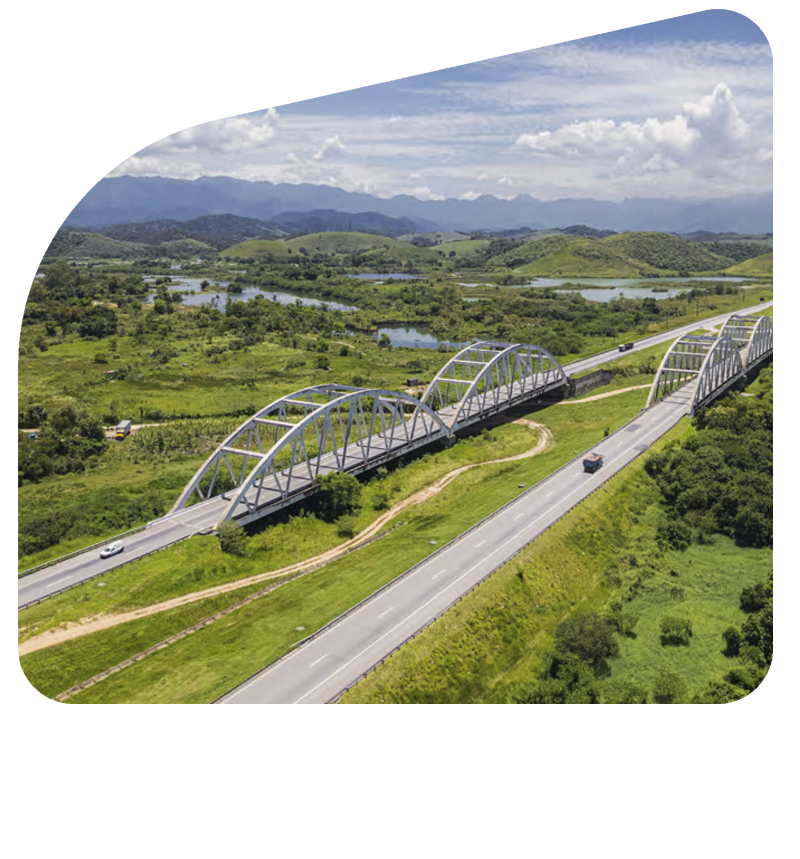
By the end of 2025, the Ecovias System was responsible for the management and operation of 4,800 kilometers of highways, distributed across eight states in the country, in a portfolio consisting of 12 highway concessions, in addition to a logistics platform (Ecopátio) and a port asset (Ecoporto) in the Port of Santos.
The operation and maintenance of all the infrastructure we provide is carried out by local teams, who follow standardized criteria, procedures, and processes, with the goal of offering a safe and high-quality travel experience.
Investiments
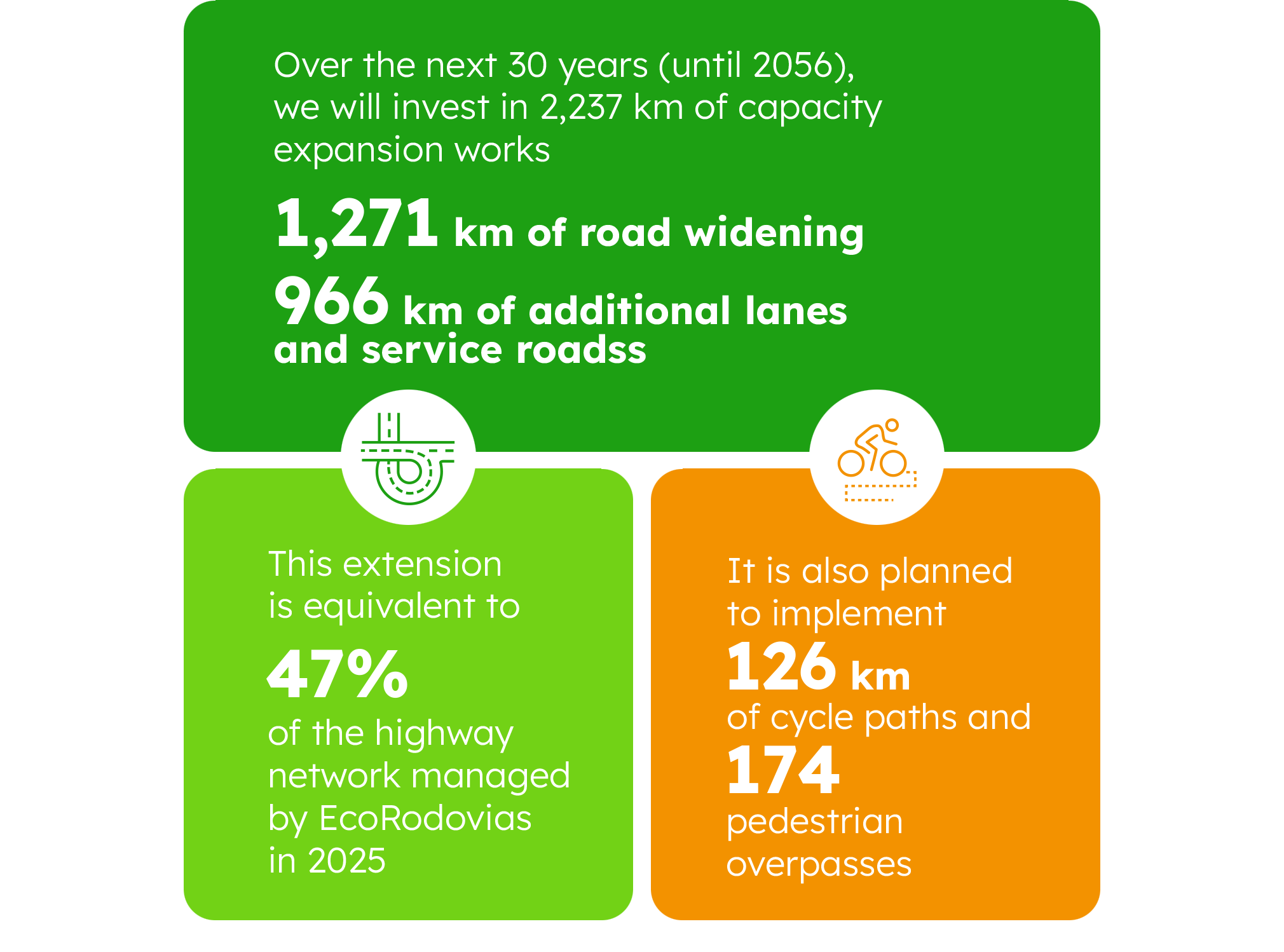
We are an infrastructure company focused on improving and developing the road network we manage. The investments we make in concessions are the main driver for achieving this goal.
In 2025, the amount invested in our units was R$ 5.1 billion. To improve the realization of CAPEX, we structured a new Cost Control area, which is responsible for monitoring and evaluating the execution of costs related to civil works.
We use cookies and other similar technologies to improve your experience on our platform. By continuing to browse, you agree to the conditions set out in our Privacy Policy.
Continue and close