
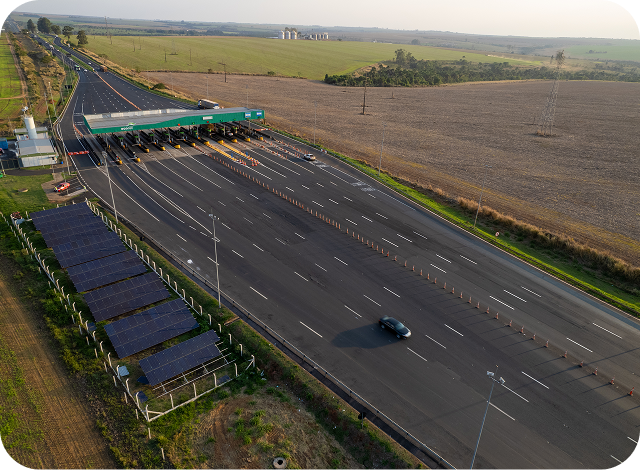
Climate change impacts the future of the planet.
As a company with sustainability at the core of its business, EcoRodovias Group recognizes the imperative to implement actions that mitigate long-term impacts on society.
In order to manage all aspects related to this topic, we established, in 2024, a Climate Strategy plan supported by five drivers that guide all actions and investments toward the goals defined in our 2030 ESG Agenda.

Carbon footprint
- GHG inventory for scopes 1, 2, and 3 audited by an independent third party in accordance with the GHG Protocol.
- Analysis of the BAU (business as usual) scenario.
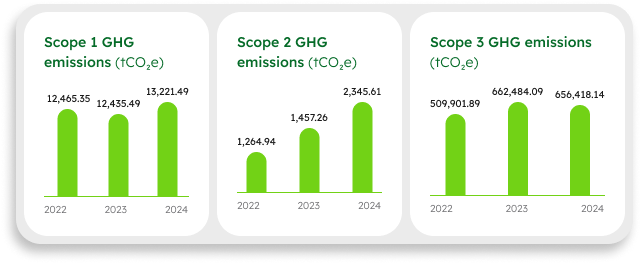
Check out some statistics 

Reduction Targets
- Clearly defined CO2 reduction targets established through the 2030 Agenda, fully aligned with the Paris Agreement.
- Alignment with ASTM’s SBTi Target.

Decarbonization Actions
- Decarbonization Plan.
- Internal carbon price and MAC curve.
- Low-carbon scenario analysis.
- Research and innovation in low-carbon solutions.

Climate adaptation actions
- Climate vulnerability study.
- Climate risks and opportunities (TCFD).
- Plan with climate adaptation actions (resilient infrastructure).
- Alignment with financial planning.

Well-defined governance
- Establishment of climate governance structure for decision-making.
- Development of a specific policy for climate management.
- Climate-related issues addressed at the board level.
- Responsible Leadership and Organizational Engagement.

Value chain engagement
- Direct influence on the supply chain to accelerate climate transition actions.
Communication and positioning
- Clear and transparent communication with stakeholders.
- Influence on public policies and sectoral standards to foster a low-carbon economy.
Environmental management, biodiversity, and social integrity
- Commitment to prioritizing inclusive, equitable, fair and accessible initiatives.
- Encouragement of participation from communities and public authorities in the planning and execution of initiatives, with a focus on delivering social, economic, and cultural preservation outcomes for all stakeholders.
Our 4 pillars of decarbonization

- Substitution of fossil fuels with biofuels and the adoption of less polluting refrigerant gases
- Conversion of fossil fuel-powered equipment to electric-powered equipment.
- Implementation of more sustainable processes and engagement across the value chain.
- Investments in photovoltaic panels for renewable energy generation and the purchase of I-RECs.
Main achievements in recent years

2023
Acquisition of I-RECs (Renewable Energy Certificates) and launch of the Ethanol Project: prioritizing the use of ethanol in operational light vehicles, replacing gasoline.
2024
Ethanol Project – Phase II: implementation across all EcoRodovias Group units and replacement of cooling equipment by acquiring models that operate with less carbon-intensive gases.
2025
Electrification of 10 operational tow trucks in Ecovias Ponte and the launch of a pilot test for the use of biodiesel (B100) in heavy vehicles in Ecovias Noroeste Paulista.
